
Blog
Worms in humans – Symptoms, Effective Treatments

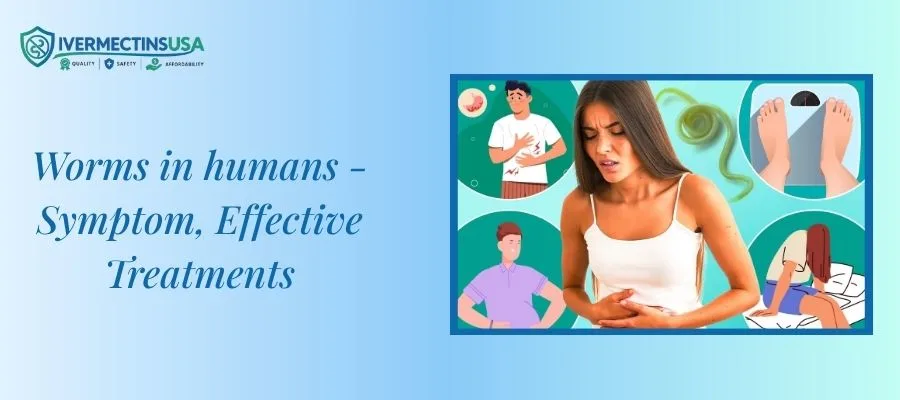
When the parasitic worms that live in soil, water and animals find a way to enter the human body, they can take up residence in the body and survive by taking nutrients from the body’s tissues.
Worm infections can occur at any age and cause symptoms that range from an itchy skin infection to more serious conditions such as abdominal pain, diarrhea and/or digestive system problems. Some worms in humans may take up residence in the body for many years causing no problems.
Other parasitic worms in humans can cause digestive problems. Knowing how worms are spread and the symptoms of a worm infection can help the public identify an infection and take the appropriate steps to get treatment.
Key Takeaways
- Intestinal worms are parasites that are found in the digestive system.
- Threadworms (pinworms) can cause itching around the anus. This itching usually occurs at night.
- Worm infections can occur from contact with contaminated soil or water, contact with animals that carry parasitic worms, and from food and water that is not safe.
- Symptoms of a worm infection can be identified from a test that is done on tape that is stuck to skin.
- Anti-parasitic drugs can be used to treat worm infections.
- Infections can be prevented by using safe food and water and avoiding contact with soil and water that may contain parasitic worms.
What is a worm infection in humans?
A worm infection is when parasitic worms invade and inhabit the body. Infections can be caused by threadworms (pinworms) and other types of tapeworms, hookworms, whipworms, and Strongyloides.
What do intestinal worms in humans look like?
There are differences in appearance of worms in humans. Some examples are:
- Threadworms are thin and tiny and look like a piece of thread, which is why they are called “thread” worms. Pinworms are very small, around 2 – 13 mm long.
- Dwarf tapeworms are small and flat, around 2 – 4 cm long.
- Whipworms are around 4 cm long and thin like a whip.
- Hookworms are very small and have a body that is shaped like a hook.
- Pork and beef tapeworms can be very long, flat, and ribbon like.
What are the symptoms of a worm infection?
The most common sign of infection is an itchy bottom, which is worse at night. This is due to the females moving to the outside of the anus to lay their eggs. People can sometimes see the small, white, moving worms in humans on or in the stool.
Children can have symptoms such as sleep disturbance, loss of appetite, and irritability. They may also have scratch marks and redness in the affected area.
Symptoms of threadworms
It is common to have an itchy bottom (particularly at night). Itching causes the threadworms to move to the area surrounding the anus, where they lay their eggs. It can also cause small, white, moving worms to be visible around the anus or in the stool. Children may have disturbed sleep, irritability and loss of appetite. They may also have redness and scratch marks around the area.
Symptoms of other worm infections
Some infections cause no noticeable symptoms. Others may produce:
- Abdominal pain or discomfort
- Diarrhea
- Tiredness and weakness
- Unexplained weight loss
- Anemia
Larvae can move under the skin and cause an itchy, red and pink line, known as larva migrans.
How do you get worms in humans?
Threadworms
Eggs of the threadworm can collect under the fingernails and spread when the person scratches the itchy bottom and then comes in contact with food, bedding, clothes, and other surfaces. Eggs can survive for up to 2 weeks on a surface.
Other Worms in humans
Other infections can spread in different ways.
- Hookworms: Larvae can enter the body through the skin and expose to infected soil and sand.
- Tapeworms: People may get infected through eating undercooked pork or beef.
- Ascaris: Infection can occur through swallowing the eggs from contaminated soil or food.
- Dog tapeworms: Eggs can be spread through contact with contaminated soil, animal fur, or feces.
- Dog and Cat Roundworms: Contact with contaminated soil can cause toxocariasis.
Parasites can be found in most parts of the world including developed and developing countries. Travel to tropical and sub-tropical areas may put you at higher risk of parasitic infections.
When should I see my doctor?
Notice persistent abdominal pain? Have you been experiencing nausea or vomiting? Are you feeling extreme tiredness for no reason? Go see your doctor if you’ve found worm segments or an entire worm in your feces.
Is your diarrhea ongoing for more than 2 weeks? Are you having an itchy skin rash for no reason? Do you feel like you are losing weight for no reason? Go see your doctor for these symptoms too.
Mention your recent international travel to your doctor if you are experiencing any of the above symptoms, as some infections may take a while to show symptoms.
How are worms diagnosed?
The diagnosis of threadworms is through a sticky tape test. A laboratory examines a sample under a microscope to look for threadworm eggs.
For other worms, a stool sample is given to a laboratory to look for the presence of eggs, larvae, or segments. Sometimes, blood tests are done to check for worm infections like strongyloides.
How are worm infections in humans treated?
As with the diagnosis, treatment is dependent on the worm. Threadworms are treated by giving all household members the same medicine to avoid reinfection. Other worms in humans may require various doses and treatment lengths of antiparasitic medicines. Hydatid disease for instance, which is a dog tapeworm infection of the liver and lungs may require surgery, medication, and/or treatment by a specialist.
Treatment is dependent on the type of worm. Mebendazole is used to treat certain intestinal worms like threadworms (also known as pinworms), roundworms, whipworms, and hookworms. Ivermectin is used for some infections caused by Strongyloides. Fenbendazole is a veterinary medication and is not approved by the FDA to be used for any parasitic infections in humans in the United States.
Always see your doctor if you’re concerned. Not every deworming medicine treats all worms in humans.
How can I prevent infection with worms?
Infections with worms in humans can be prevented with proper hygiene practices.
- Wash your hands after using the toilet, gardening, and after handling animals.
- Keep your fingernails short and clean.
- Fruits and vegetables should be washed before eating.
- Cook pork and beef well done.
- Wear shoes when walking on contaminated soil and sand.
- Wash your hands after contact with pets.
- Follow your veterinarian’s recommended schedule for worming your dog or cat.
Can a child with worms go to daycare or school?
If your child has threadworms, they can still attend school and daycare after treatment. Threadworms do not typically give kids diarrhea, however, if your child has diarrhea, keep them home according to school/daycare policies. Be sure your child practices good hygiene.
Final thoughts
Worms in humans, especially those that affect the digestive system, can be quite prevalent worldwide. Symptoms vary, and worms in humans can even affect other organs and body systems. Knowing and understanding signs and symptoms, learning how worms are transmitted, and getting an accurate diagnosis can help with treatment.
Personal hygiene and safety as well as practicing safe food handling and preparation can help the family unit remain worm free. When necessary, seek your family doctor’s help and advice.
Resources
2 thoughts on “Worms in humans – Symptoms, Effective Treatments”